Hey, I’m an art pilgrim; I’m always going to want to see the original. But when it came to Les Très Riches Heures du Duc de Berry, I was going to have to settle for looking at reproductions. This delicate manuscript has been preserved out of view in the Musée Condé in Chantilly France and I had never heard of anyone getting a chance to see it.
So here’s what happened; the museum wanted to restore the manuscript and to do that, they had to unbind some of the pages, including the famous monthly calendar illustrations. While the pages were unbound, they decided to put them in an exhibit and—duh!—I cashed in my frequent flyer points and flew to France to see it.
In 2013, HOB and I visited the Château de Saumur, which is illustrated in the Très Riches Heures du Duc de Berry calendar page for September. Since I was able to see the manuscript this September, let me start with that month in the calendar.


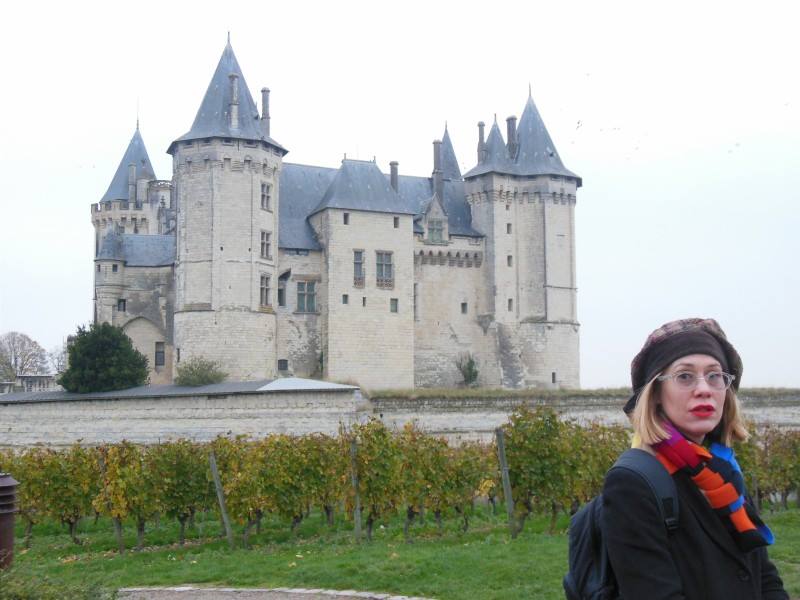
The illustrated month of September is in a real space, not a fantasy space. The artist is showing the chateau as it looked in 1411, which is pretty much as it looks in present day. A grape harvest is in progress in the foreground, and you can see a little vineyard still exists in present day outside the chateau (behind me in the second photo).
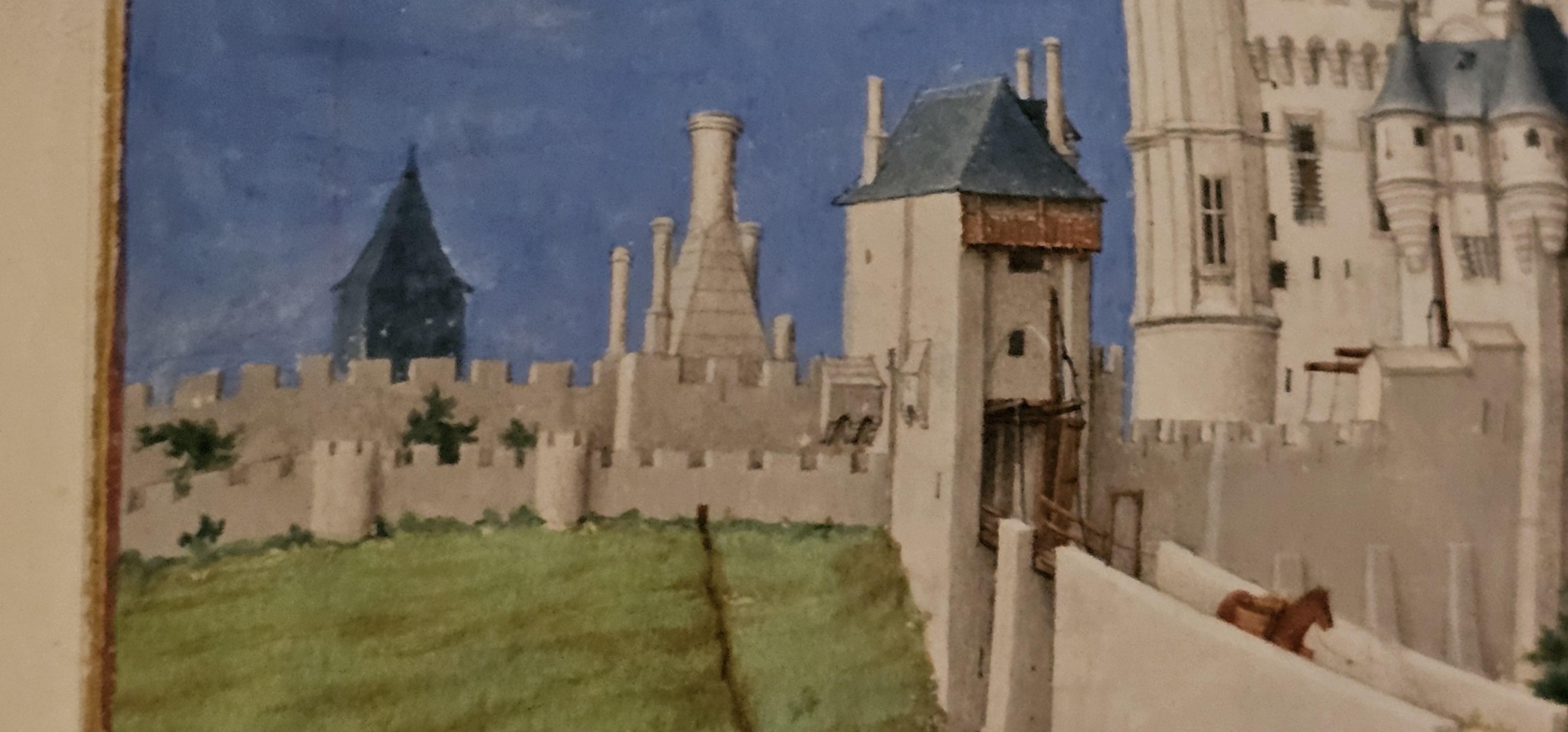
Look a little closer at the wall to the left of the chateau and dig that horse cruising through a gate down a chute.
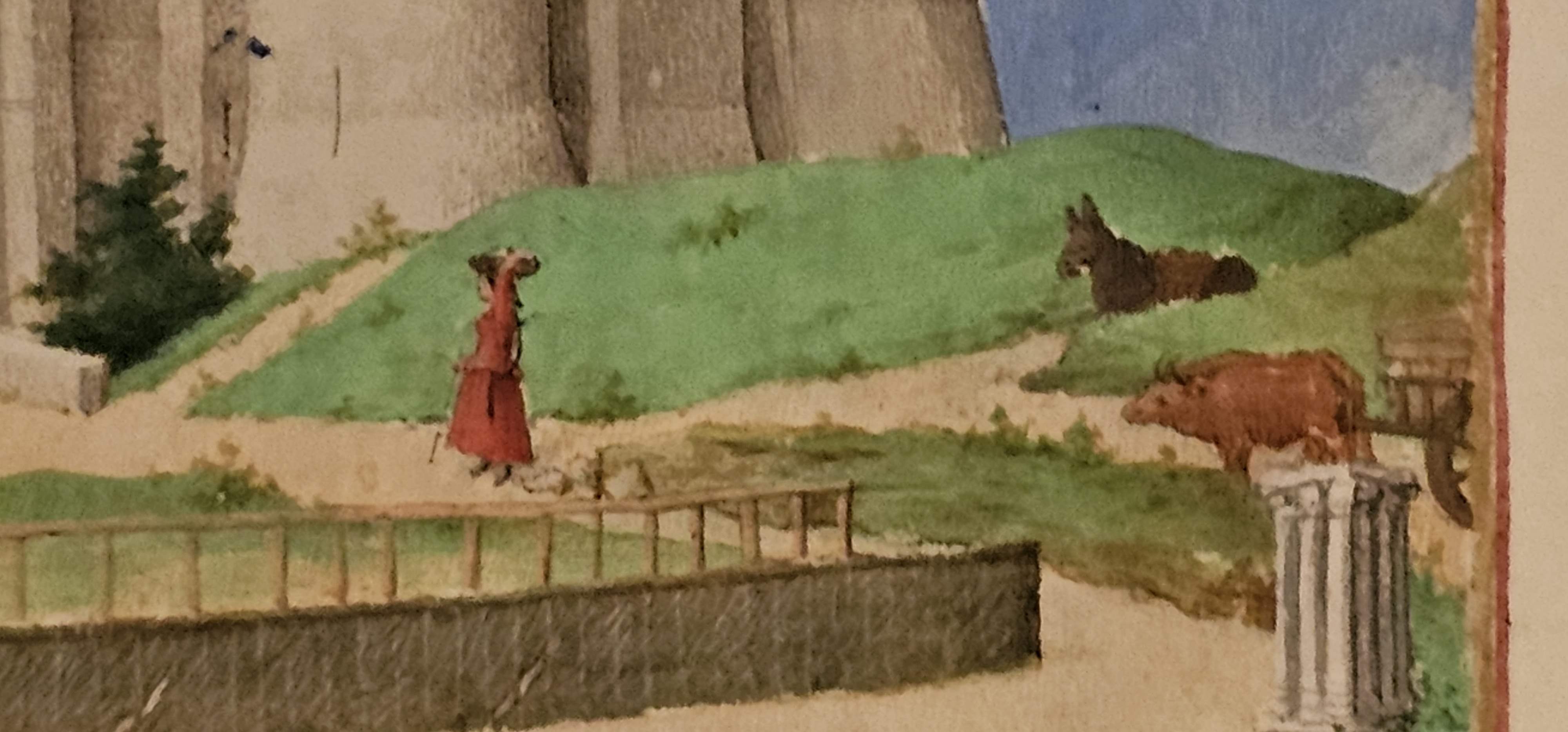
A cow and donkey approach a woman carrying a basket on her head.
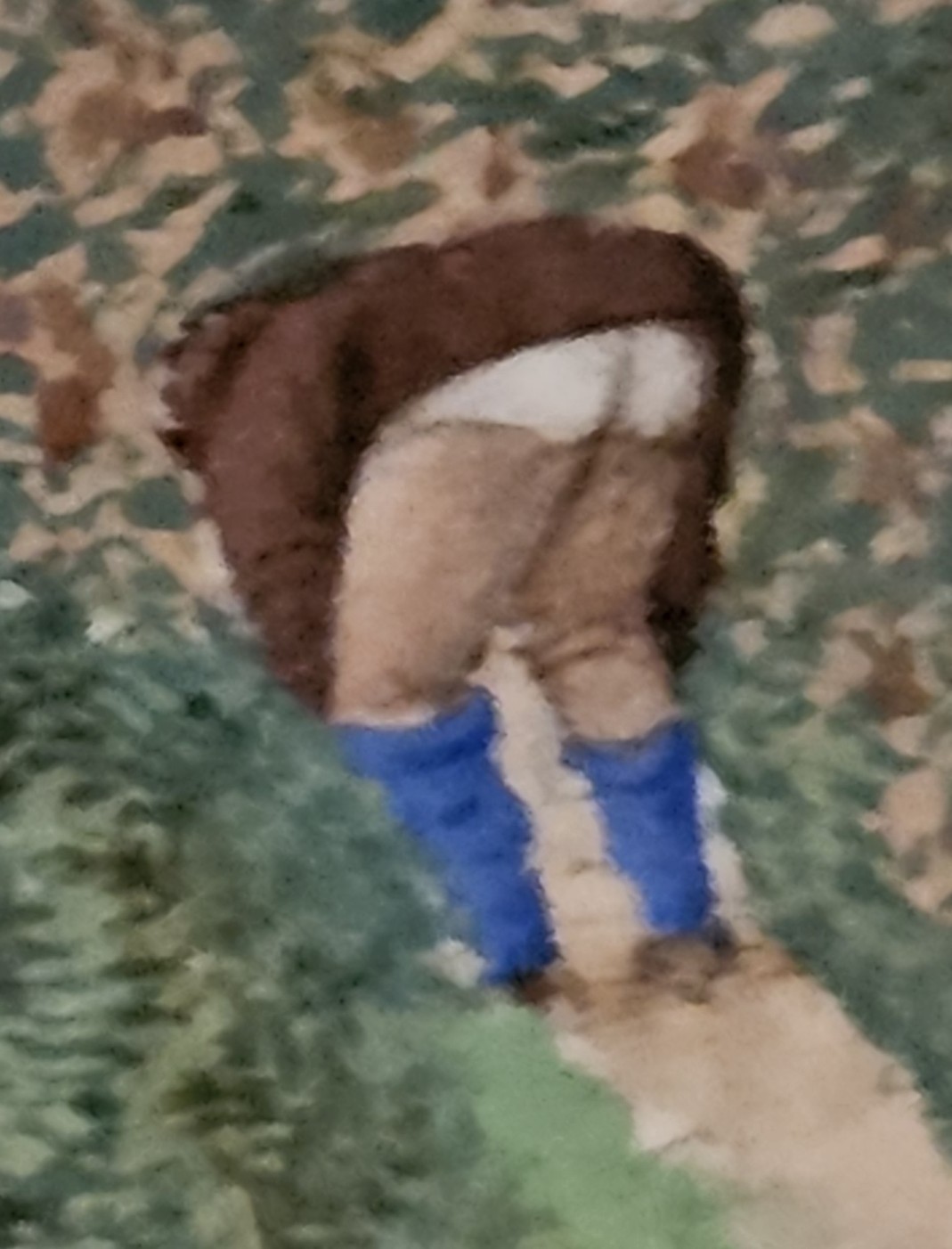
I spy your medieval tighty-whiteys, bro.
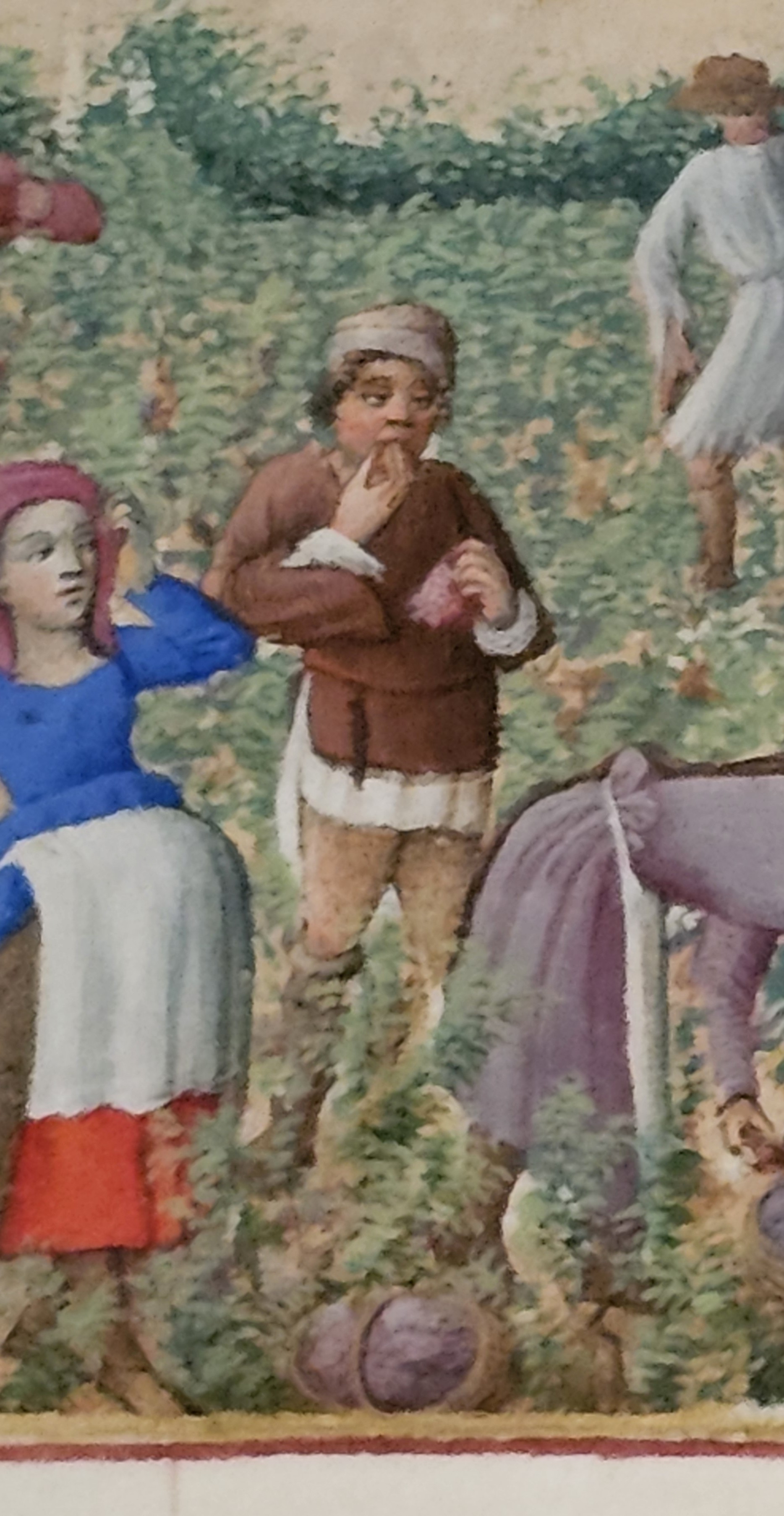
And a jaunty peasant steals a grape while a pregnant lady wipes sweat from her face.

Ok, let’s go back to January, where the book’s namesake—the Duke de Berry—is shown receiving a bunch of New Year’s gifts. The wicker basket behind his head is a not-so-subtle halo, letting you know that this is one important dude. I think the book should be called Les Très Riches Heures du les Frères Limbourg because the Limbourg Brothers—Paul, Herman and Jean—were the main artists. But okay, Duke Jean of Berry had the good sense to hire them back in 1411, so we’ll give him some credit. Also, he lets his tiny dogs hang out on the table, next to the roasted gerbils.
The more time I spent in the exhibit, the more I could see how the individual calendar pages were clearly made by different artists. I mean, it isn’t like I could know which was which, but there were some distinct stylistic differences.
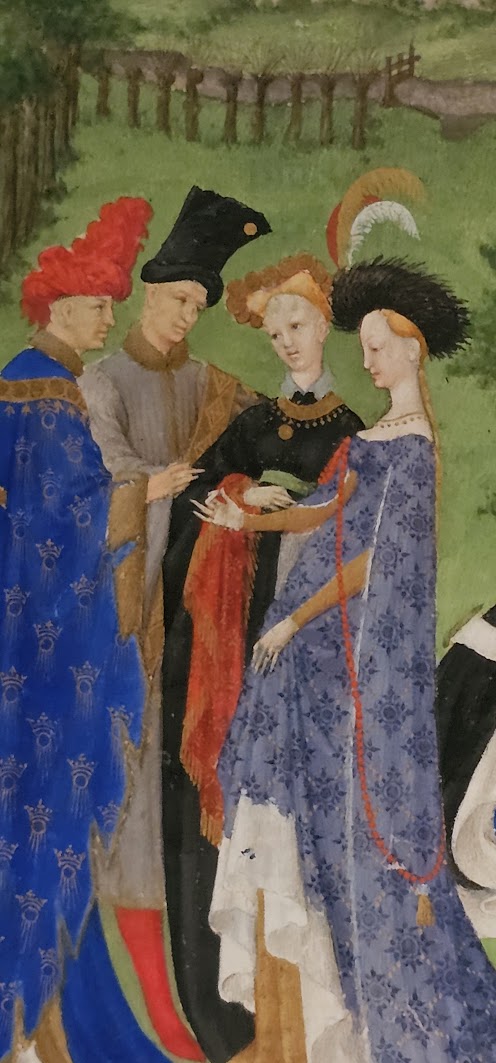
My least favorite artist—I’m going to guess this was Herman—made a few boring illustrations of royalty parading around in eccentric hats during the spring and summer months. The ladies have high boobs and everyone is really loooonnnnngg in the middle. Herman used some interesting shades of green that I don’t recall seeing in other illuminated manuscripts of that time but other than that innovation, these tend towards generic late medieval art. I bet he is responsible for January, too, since that is the Duc de Berry ass-kissing month.
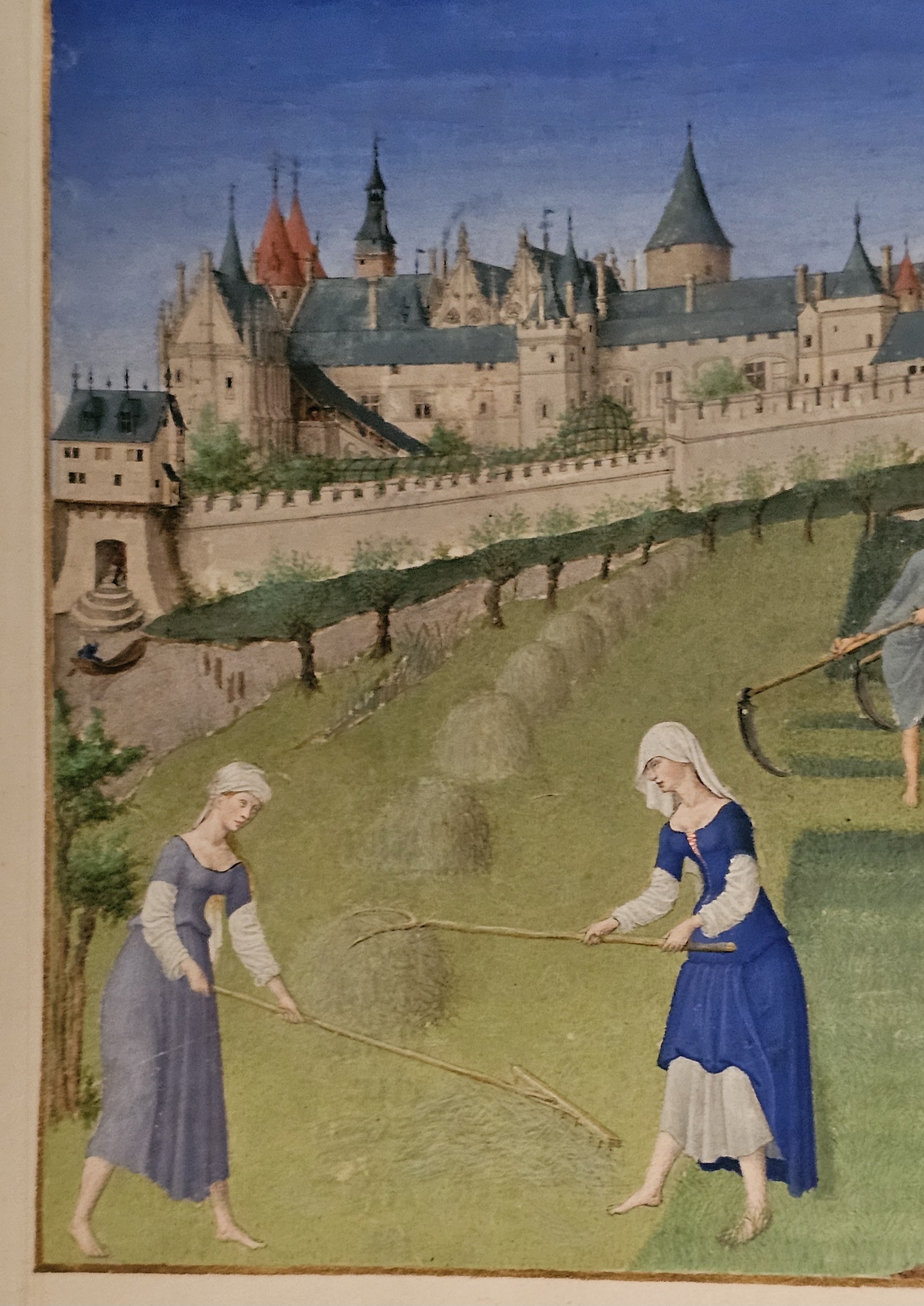
Now let’s talk about Jean; that dude loved to paint peasants whose dynamic motion gives them a rhythmic dignity. I’m guessing Jean made the month of June, which depicts the hay harvest.

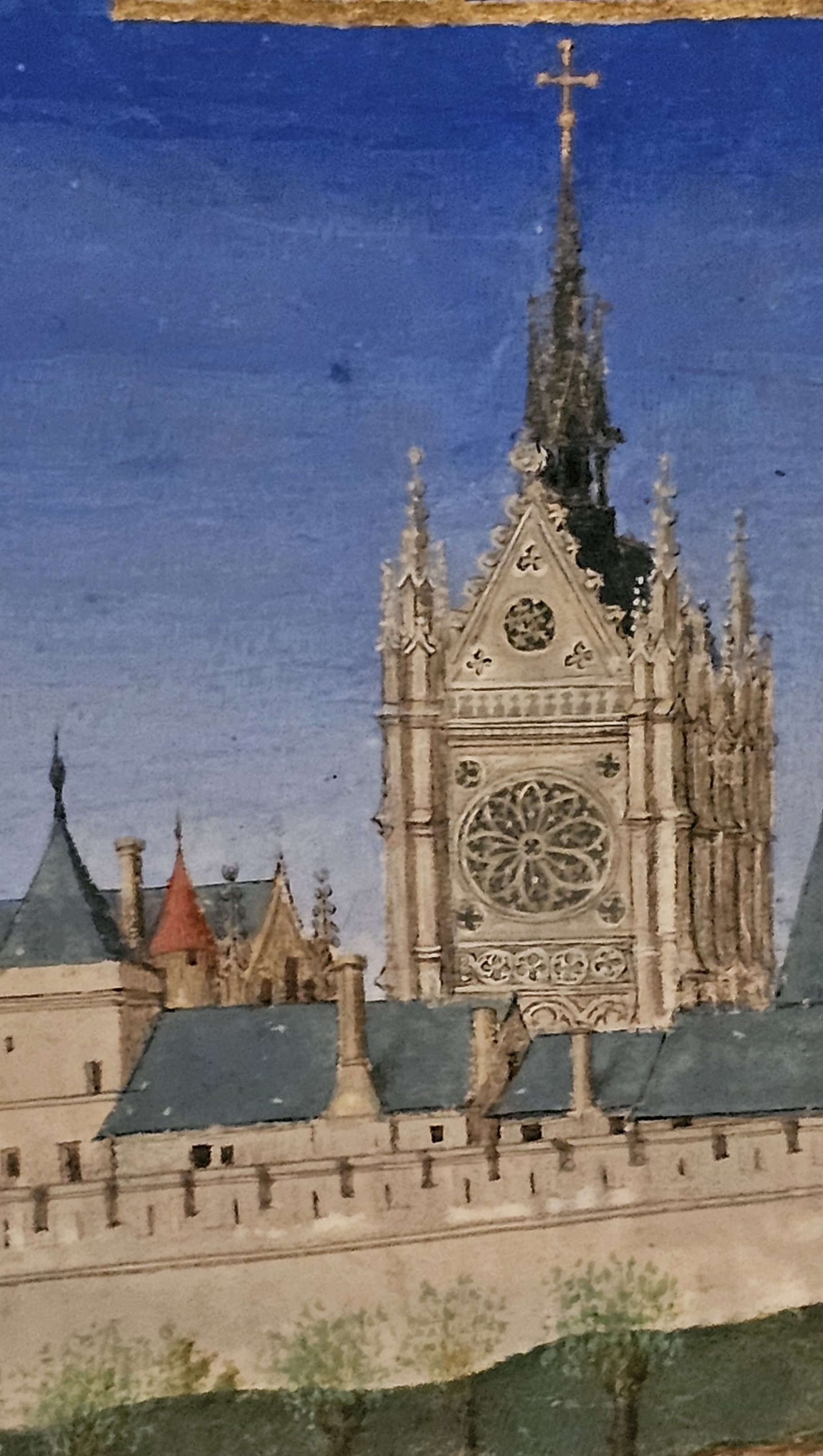
Here are some more details from June. The Gothic tower on the right is Saint Chappelle, which is still a popular tourist destination in Paris.
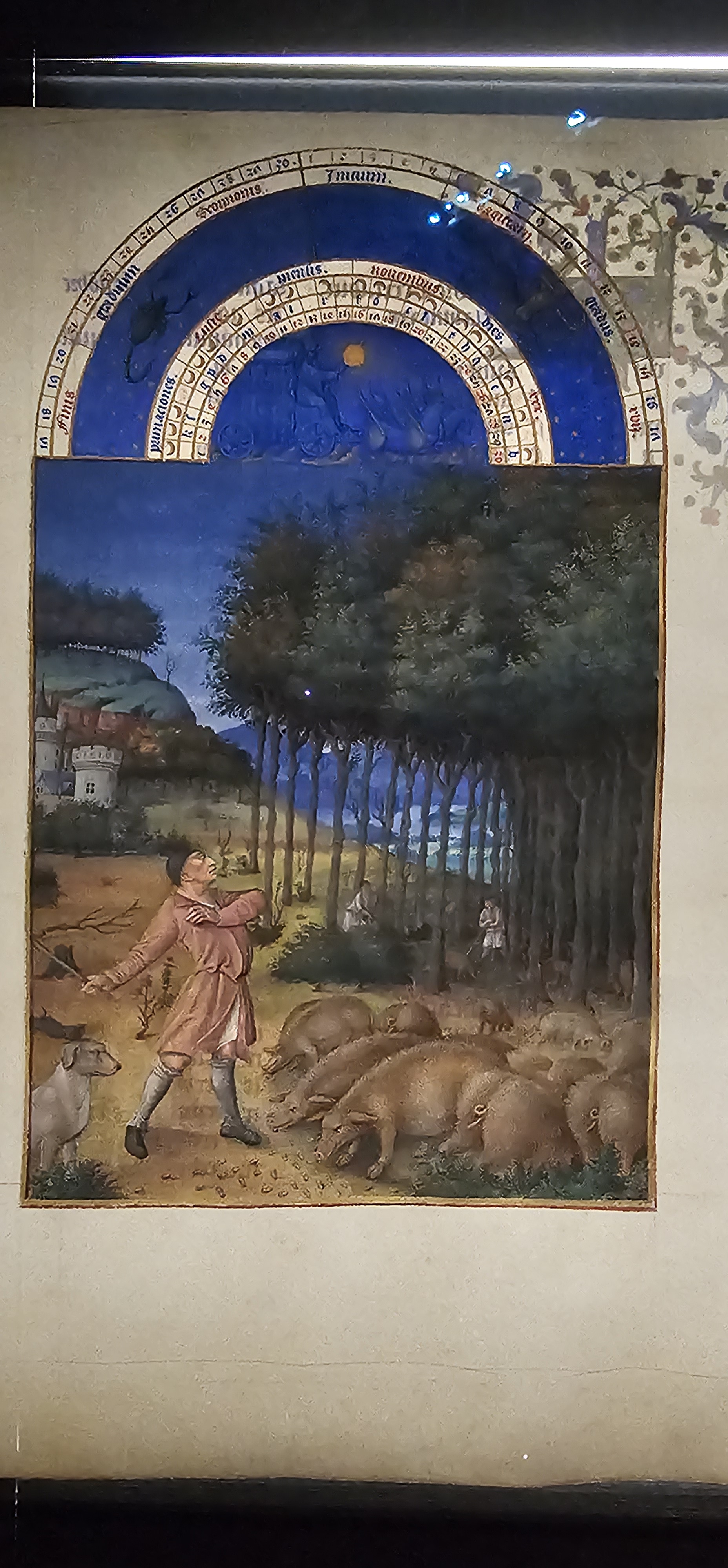
Jean’s month of December was an unexpected hit for me.
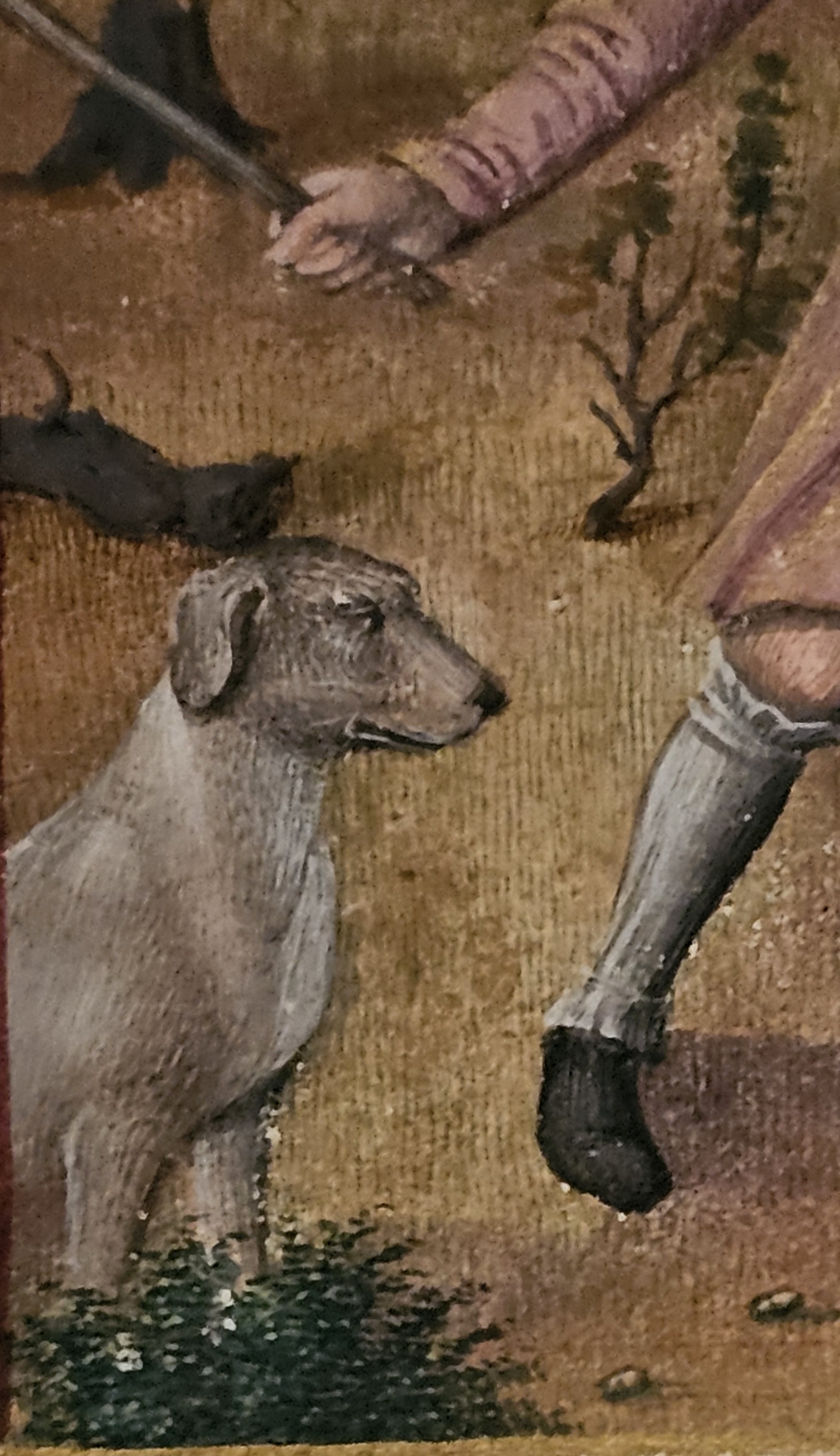
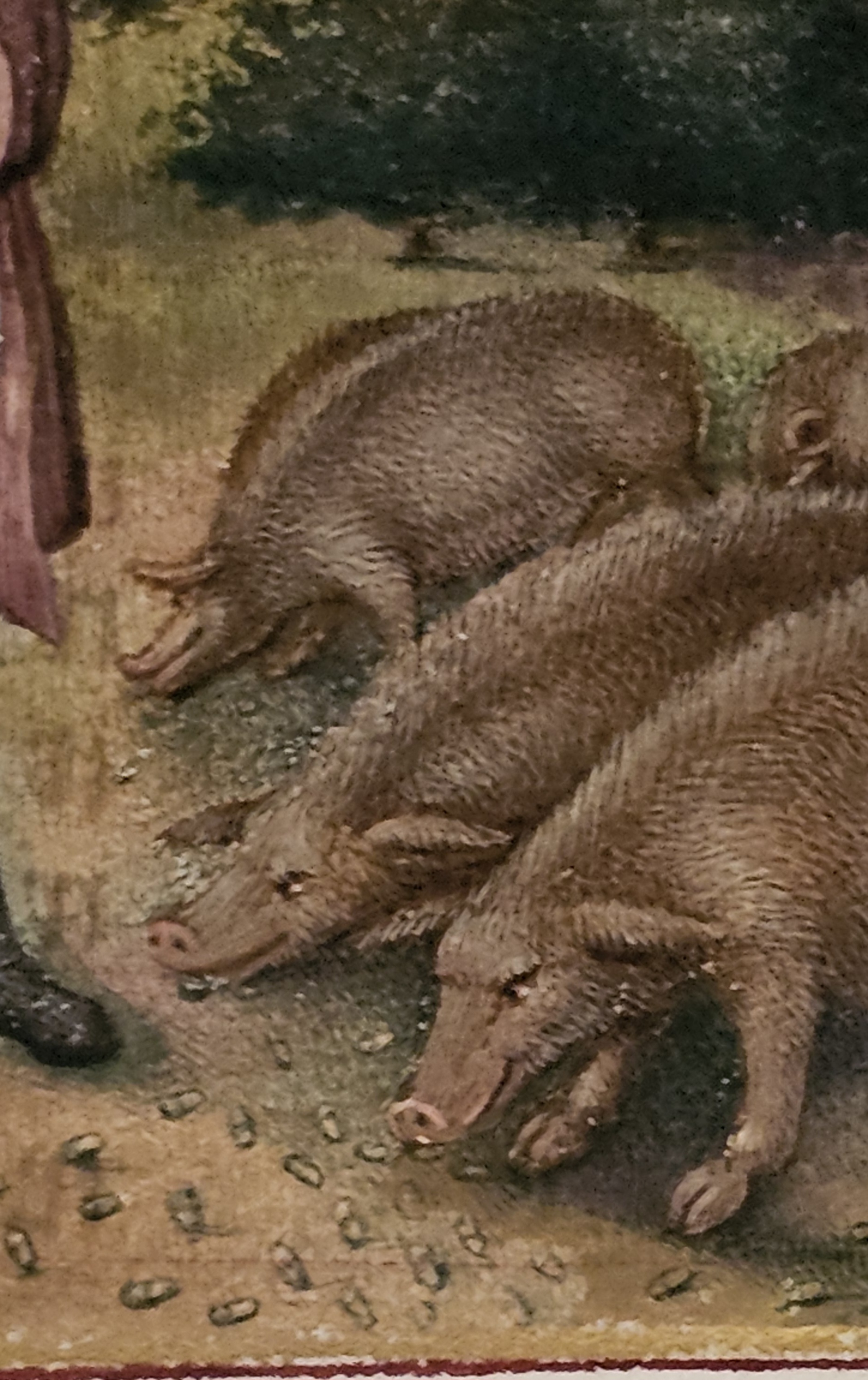
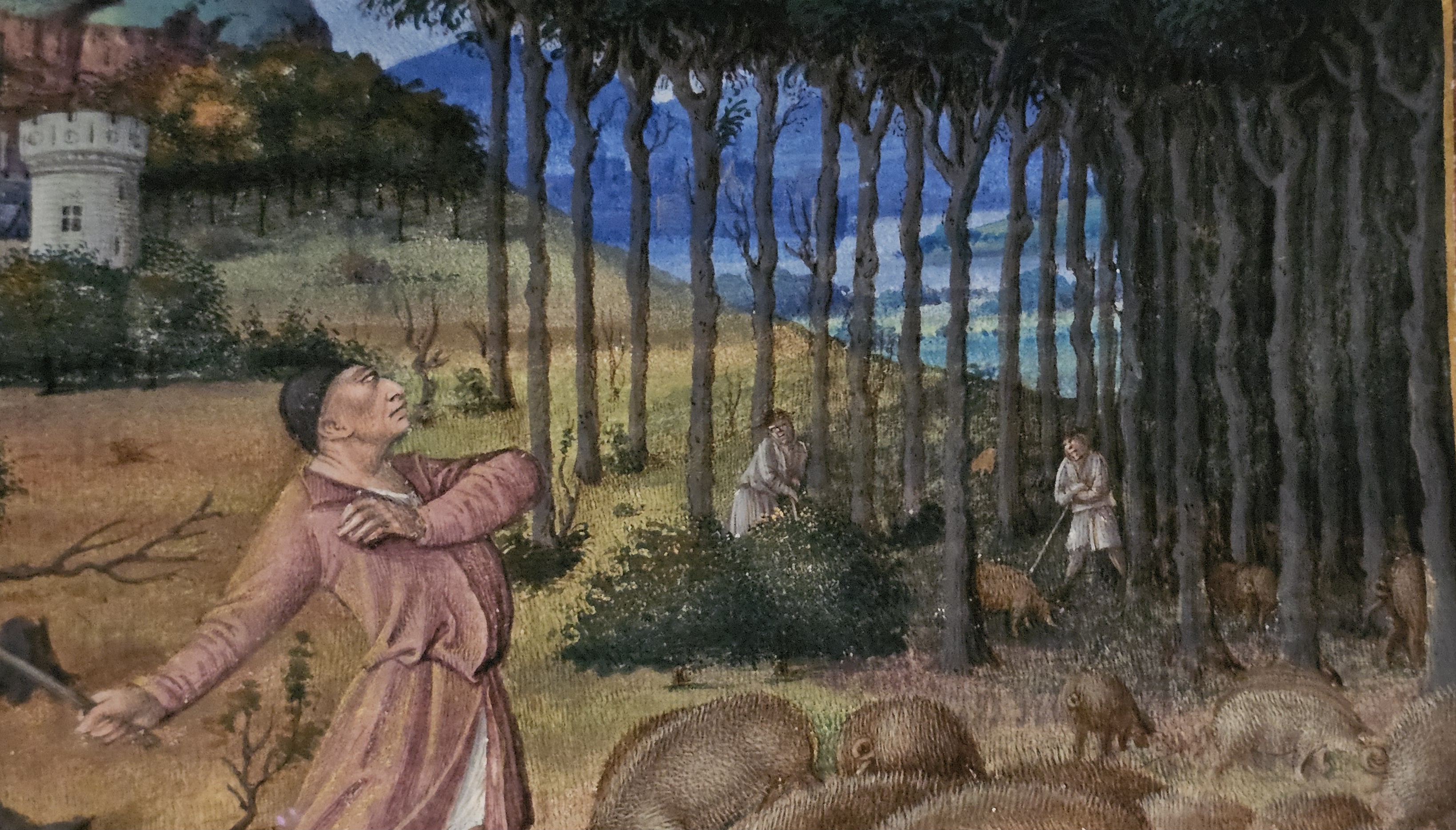
Both the farmer (fattening up his pigs on acorns) and his dog are downright heroic. And–ah!–the undulating trunks of the trees.
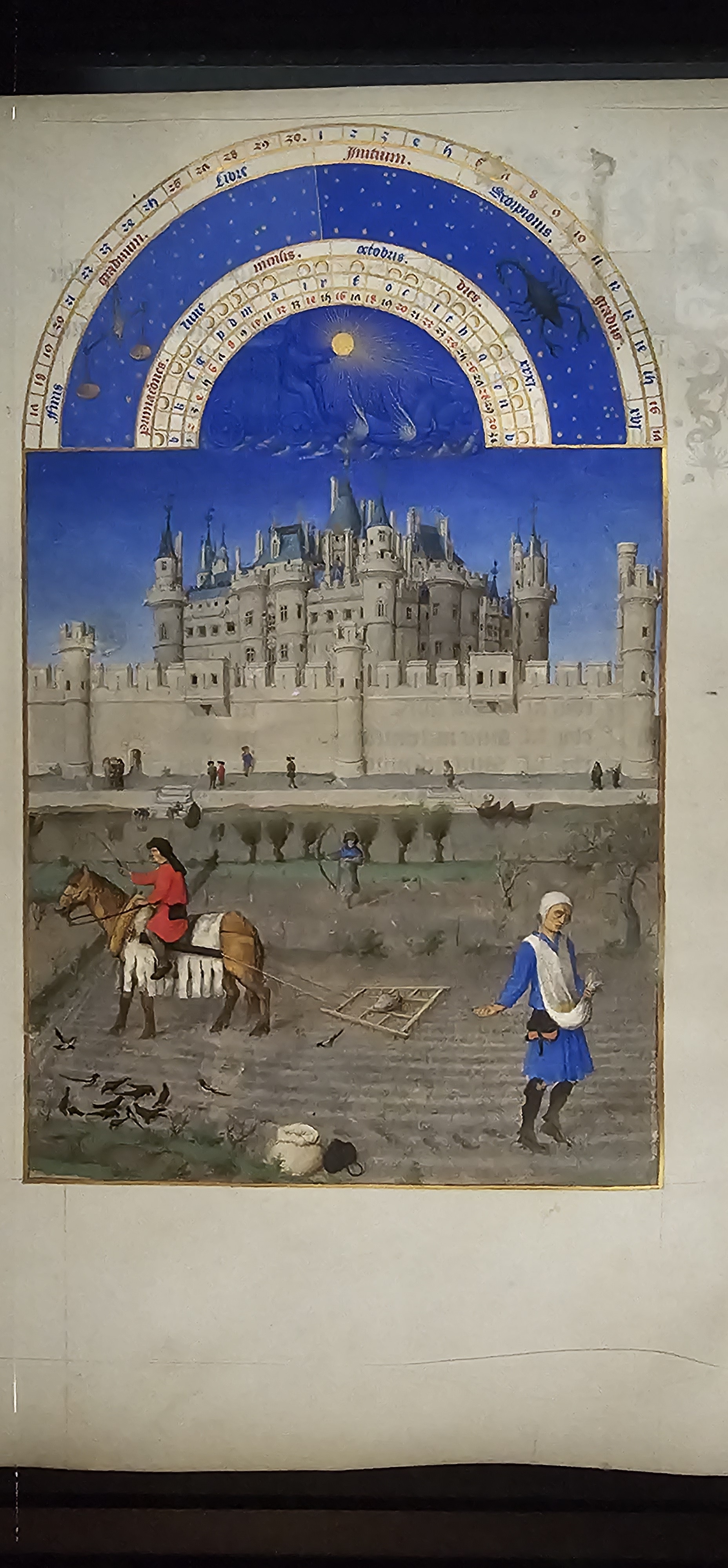
Now Paul, he’s my favorite artist of the three brothers. Here is Paul’s October, showing a peasant trying to sow some seeds and getting pretty annoyed at the birds eating them before he can cover them up with soil. I love the fancy castle—this is actually the Louvre!—contrasted with the rustic scarecrow in the center foreground. Surely it must also have been Paul who painted the month of September (that I have at the beginning of this post), with the luxurious Chateau in the background of the grape-sneaking peasant.
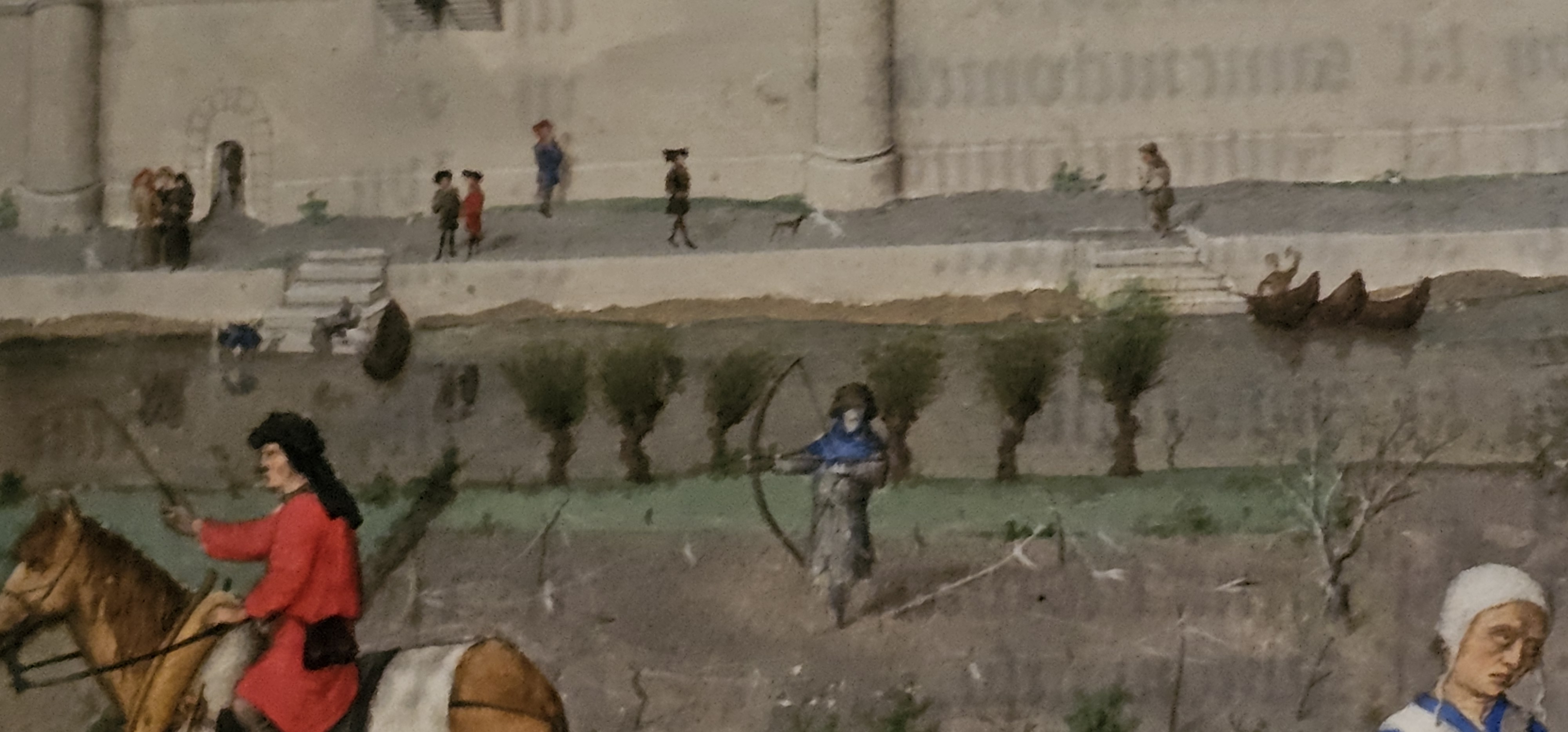
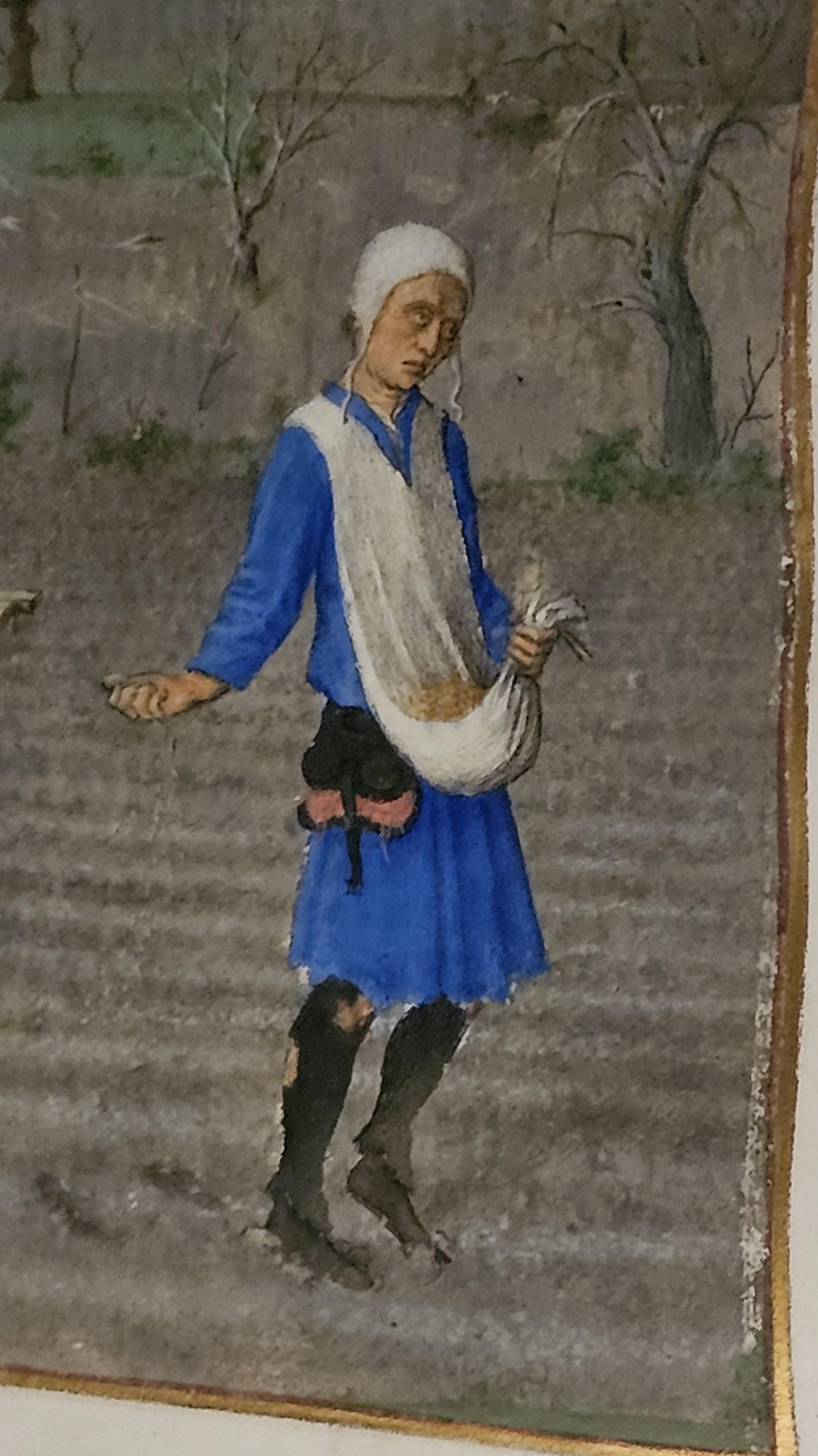
I love the expressions on Paul’s peasants—this guys is like “Oh, come on you stupid birds!” and how he really shows the ragged details of their well worn clothes, like the holes in this pissed off peasant’s socks.

Paul’s plow, shown in March, is homespun but highly detailed—is that a bird perched on the center bar?

FEBRUARY! Here it is, Paul’s best month. How convenient for him to open up the wall of the peasants’ house so we can see them warming their legs (and, um, other body parts) by the fire. Sheep are huddled together in snow capped pen while more peasants do winter chores in a background leading to twee little church. The most immaculately-branched tree in all of illuminated manuscript history stands proudly in the center.
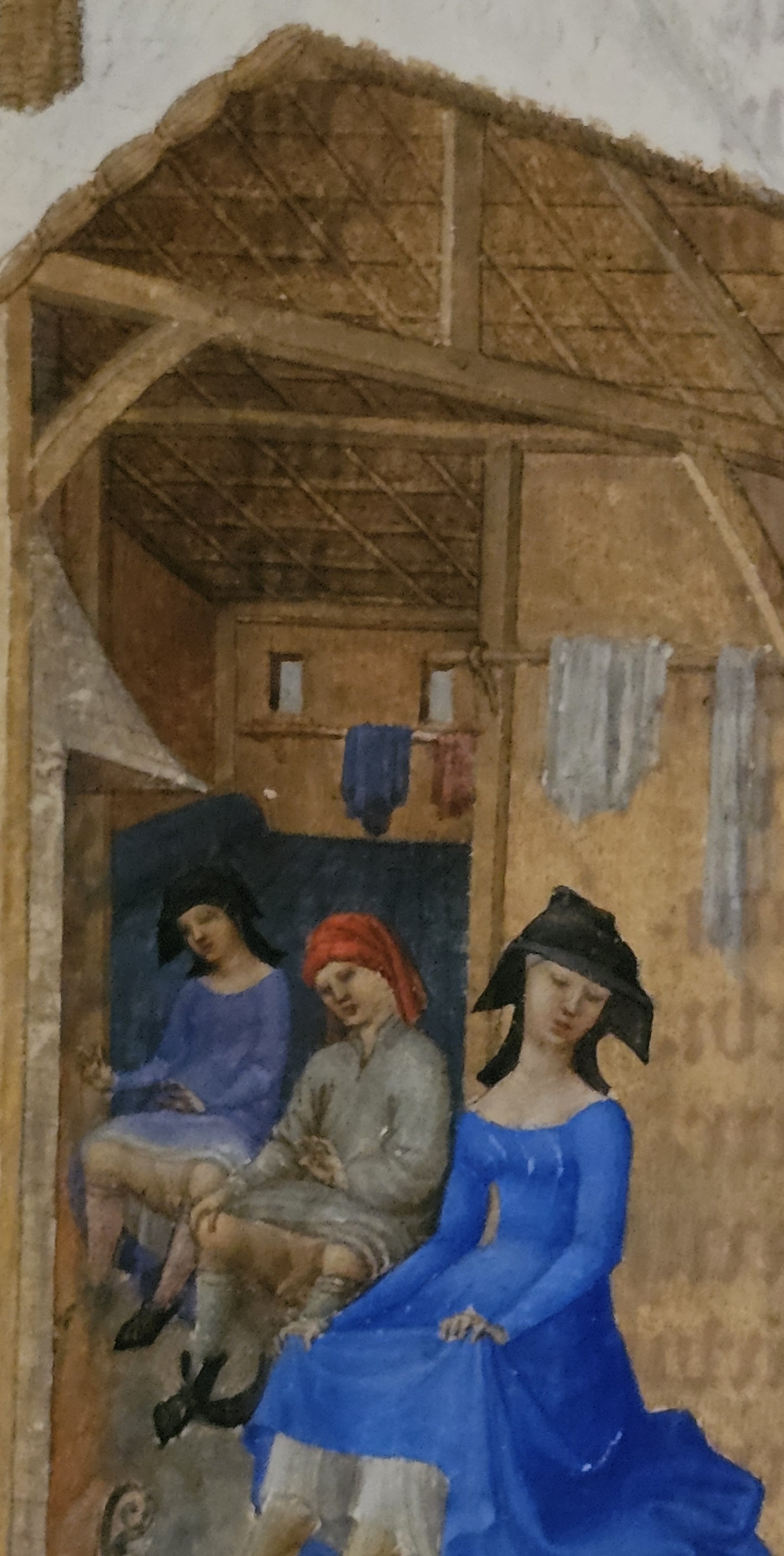
My dude Paul was earthy as hell. While the lady in the blue dress is holding back her dress prissily, the couple in the background are going full commando to the fire.
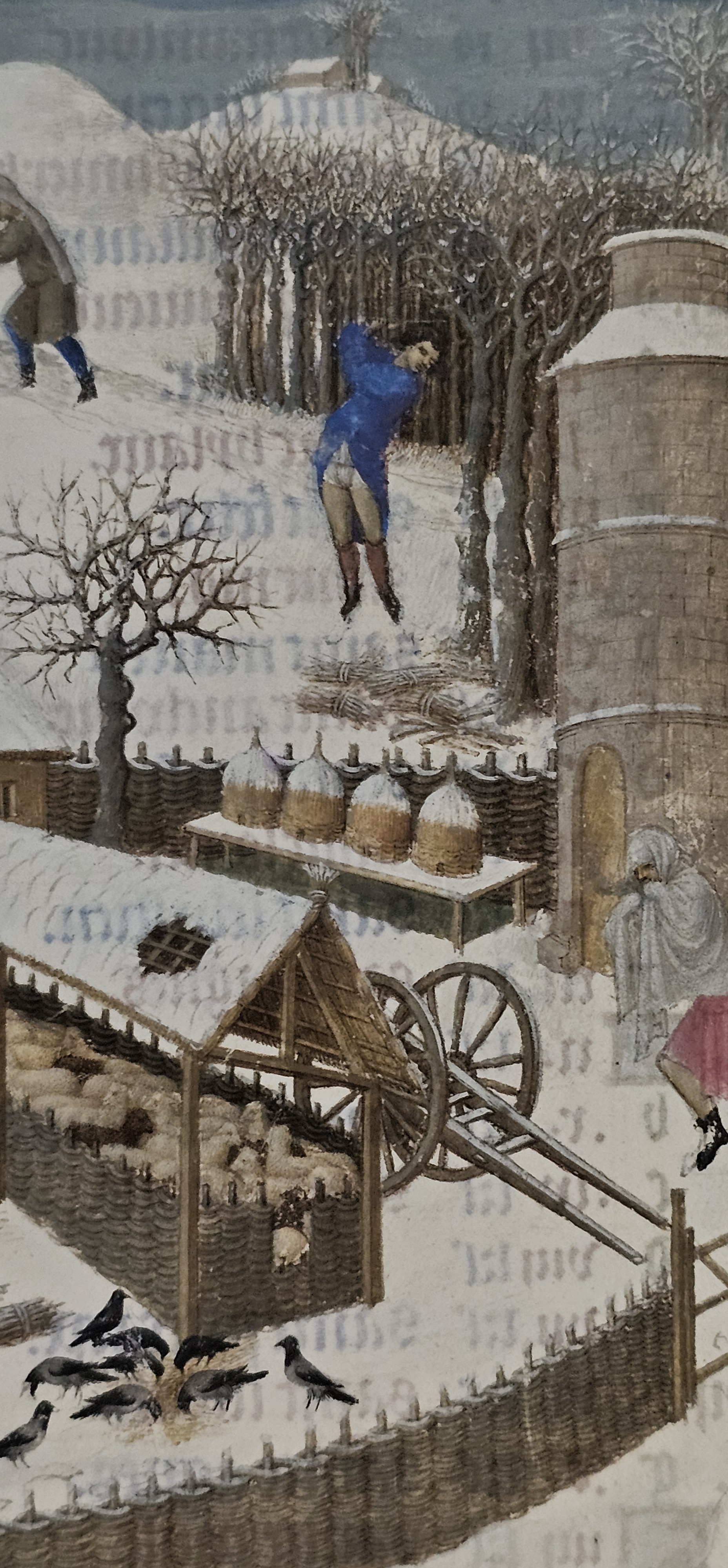
Snowscape with….more tighty whiteys?
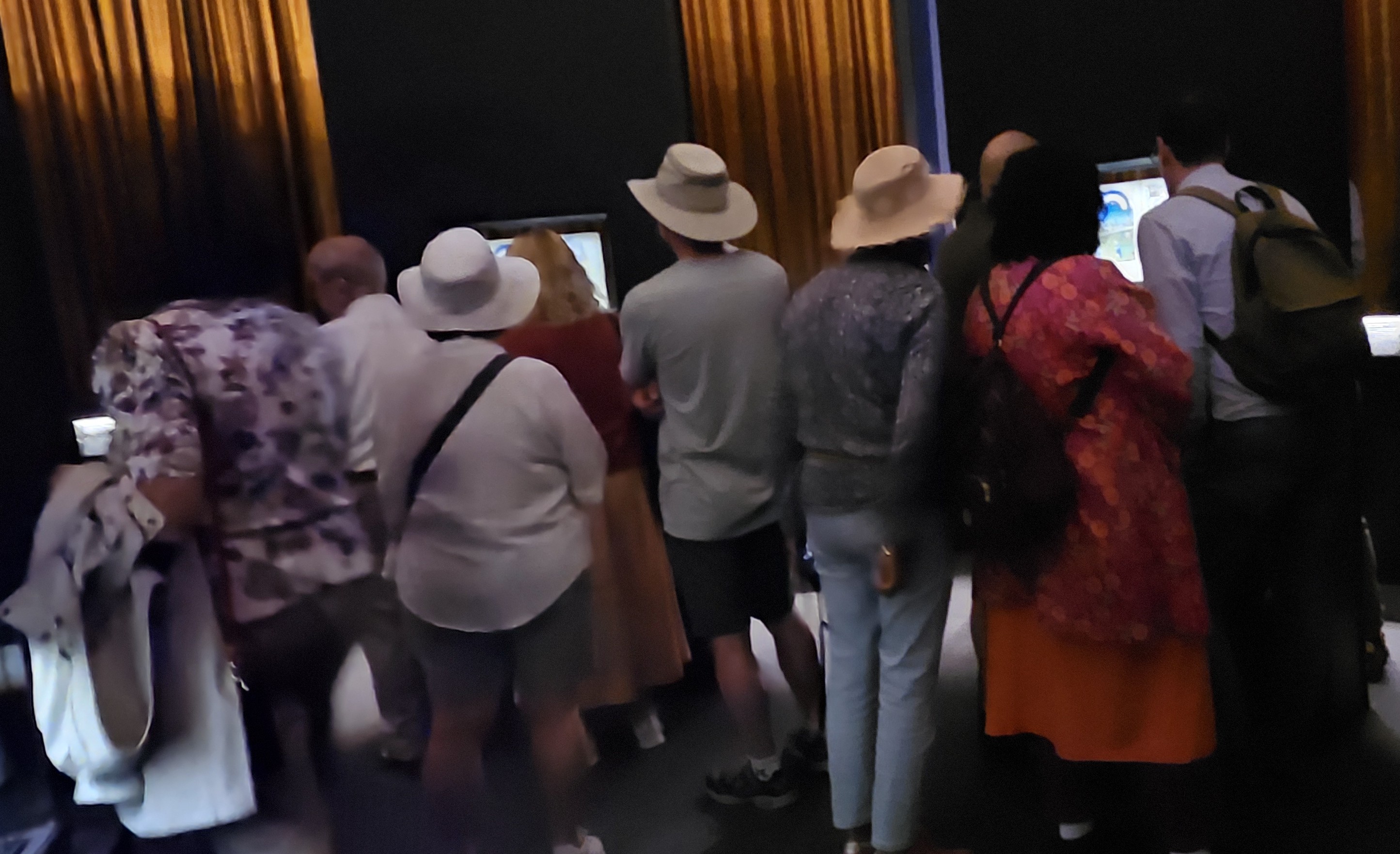
I spent a full day and the following morning with the Très Riches Heures—long enough to keep track of the folks who, like me, were lucky to have the opportunity to experience this precious manuscript. A more dedicated group of coughers, sneezers, farters and wearers of sunhats and vests with many pockets you never will meet again. My people, in other words.
How I got to Chantilly: there’s an easy bus from Senlis but, due to a transit strike, I had to take a taxi.
Where I slept: Hotel l’Avenue. Price: €95 for a single. Recommended: no.

 Picnic at the Cathedral
That was an opportunity you just could not miss!
LikeLiked by 1 person
And of course, I had to visit some other places in France…while I was in the neighborhood.
LikeLiked by 1 person
Love your comments!
LikeLiked by 1 person
Thank you, Maurizio!
LikeLike
The manuscript is fascinating in itself, but your take on the details really brings it to life. I enjoyed this post very much.
LikeLiked by 1 person
Thank you! It was so helpful to have a long time to look at the manuscript. I brought a couple of sandwiches and went outside (on the ground of the Chateau of Chantilly) to eat them and when I came back my eyes were refreshed and I caught a lot more details.
LikeLiked by 1 person
I especially how you helped the reader zoom on the manuscript’s human tiny details carefully painted in. Wonderful and…incredible work of art and lifestyle documentation. Clearly you’re on an email list to even know about these foreign specialty art exhibits, WoB.
LikeLiked by 1 person
Thank you, Jean. When I worked at museum it was helpful to have extended time to connect with all the details of an artwork. I don’t have that luxury of time when when traveling, of course, but I try to do my best when I’m able to experience an incredible artwork like this one.
LikeLike
It’s a wonderful visual analysis, WoB. Teaches reader how to pat attention at artistic details.
LikeLiked by 1 person
I don’t know what it says about me that, in the September image, the first thing I thought upon seeing it is was “I spy with my little eye… WHITE KNICKERS!!!!”.
Anyway, what a treat this post has been, dear WoB. I’d love to read more of these, any chance you can do more of them? Like the full Bayeux Tapestry perhaps?
Have a great weekend!
Fabrizio https://www.there-yet.com/
LikeLiked by 1 person
Thanks, Fabrizio. In fact I did write about the Bayeux Tapestry: https://picnicatthecathedral.com/2013/12/19/bayeux-tapestry-the-best-art-always-wins-the-battle/ Do you have it in the British Museum, yet? If so, eagerly anticipating *your* post.
LikeLike
Oooh, quelle faux pas! I shall read it immediately. As for having it here at the British Museum, well, the French have apparently changed the password of their security system so the folks at the British Museum can’t do what they do best, i.e. steal it.
LikeLiked by 1 person